


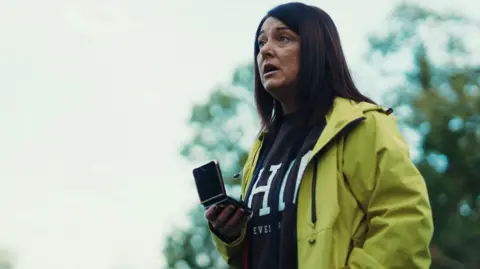
During an discussion near a local recreational area in Falkirk, a came forward.
Might I ask why you’re supporting these people to occupy this public space?” she stated while documenting the interaction on her phone.
The individual we were speaking with for our documentary was staying in a local temporary housing, where angry protests had been occurring since the summer.
The woman claimed that men from the accommodation had been interacting with local children, and requested that we take our interview elsewhere.
At that moment, a number of residents who we didn’t see playing football in the vicinity emerged over the slope.
She informed me it was my fault they were there and if “anything happens here, it’s on you.”
The individual posted her video to the social media. It was viewed numerous of times after being circulated by political influencers.
She was celebrated as a defender for protecting women and children.
I was overwhelmed with harassment and told that I should leave the town.
I disagree that my interview with this man, who afterwards decided against its use, put anyone in danger.
But this incident, and its aftermath, gave me possibly the sharpest insight yet into the concern some within the town – and elsewhere – have about refugees in their local areas.
Local Concerns and Rallies
There are about six thousand three hundred people requesting protection in the country, many of whom arrived via craft across the sea.
About a 25% stay in temporary accommodations while the authorities evaluates whether to approve their applications.
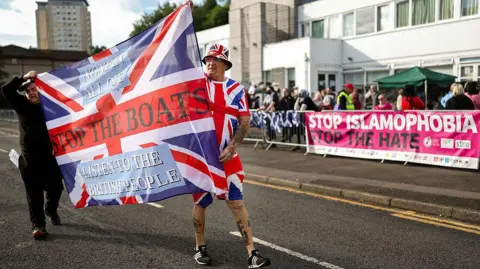
We’ve spent the last few weeks documenting at protests against the facilities around the nation.
In the community, there are more than over eleven thousand names on the accommodation register, seeking new homes. There is anger at a belief that these people – and it is solely men in the local facility – have jumped the queue.
Individuals are not generally allowed to work while their claims are being reviewed and get an allowance of £1.42 a day to live on. With complimentary dining, lodging and no expenses to pay, it angers of some.
“They’re getting entertainment, they receive comfort, they’re getting clothing, they receive communication tools, they receive health services and if you think that’s fair in our country right now, I do not.”
Mobile phones are not provided by the authorities but are commonly given to hotel occupants by organizations who assist them.
Security Concerns and Local Conflict
The men in the facility are from a variety of regions, including Iran, Africa and East Africa, and all assert they need asylum from danger.
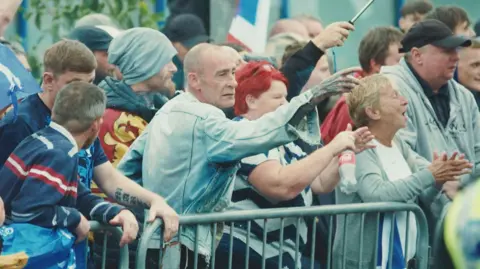
Occasionally we could see them peering out from behind covered windows, as cries of “Return them! Return them!” resounded through the roads.
The building was formerly a favored location for celebrations, anniversaries and gatherings.
No warning was provided or dialogue conducted with the neighborhood that up to ninety refugees were going to be housed here in the past.
“There’s a sentiment that a matter is being imposed on them from above by individuals who don’t understand or concern themselves what the effect is going to be.”
All the costs of sheltering individuals in temporary facilities, about a significant amount a year across the UK, are met by the administration.
Falkirk Council’s leader stated no refugee was awarded preference over anyone else.
But it’s not just demand on services which has got residents out on the roads. There is concern, too.
Former hotel occupant an individual, from another nation, was sentenced in recent months for the rape of a 15-year-old local youth.
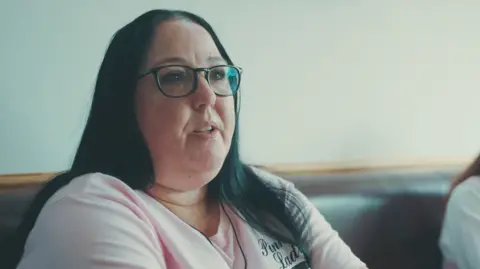
“It devastated me to know that that individual’s life was destroyed.”
“We ought not be living in fear,” she added.
In the previous year, the time of the individual’s offense, there were numerous reports of sexual assault in the town.
Police Scotland says it does not maintain information showing whether offenders are refugees or not.
From media reports, it suggests one was carried out by an refugee that year – by Nikzad.
“Local individuals do this too, but the reality is that the boats are still entering. They [the individuals] have a distinct perspective.”


